ホーム > アーカイブ > 2010-03

2010-03

Ueno Park - Zoo, and more!

Ueno Koen (上野公園) is a spacious public park located in the Ueno section of Taito, Tokyo. It occupies the site of the former Kan’ei-ji (寛永寺), a temple closely associated with the Tokugawa shoguns, who had built the temple to guard Edo Castle against the north-east, then considered an unlucky direction. The temple was destroyed during the Boshin War (戊辰戦争, 1868-1869).
Ueno Park was established via an imperial land grant to the city of Tokyo from Emperor Taishō in 1924. The official name of the park is Ueno Onshi Kōen, when translated means “Ueno Imperial Gift Park (上野恩賜公園)”.

 Ueno Koen

Ueno Koen in the Taisho era.

The park is built on the remains of the Kaneiji Temple burned down when the Meiji Government formed a new regime. Now it is a nice park and the remains of the temple can barely seen. Ueno Park is surrounded by a number of popular museums, which includes the Tokyo Metropolitan Art Museum (東京都美術館) and the National Science Museum (国立科学博物館). Museum hopping is one of the most popular pastimes for locals.

Tokyo Metropolitan Art Museum

2

A very famous statue of Saigō Takamori (西郷隆盛) walking his dog stands in the park.
Between the three museums (Tokyo National Museum, The National Science Museum and The National Museum of Western Art), a concert hall, a number of shrines, Shinobazu Pond and Ueno Zoo, you are bound to find an activity of interest – whether it be relaxing in the park, or boating on the pond, museum hopping or doting over the animals in Ueno Zoo. Ueno zoo is what really makes this area a popular tourist and recreational area for both Japanese and foreigners.

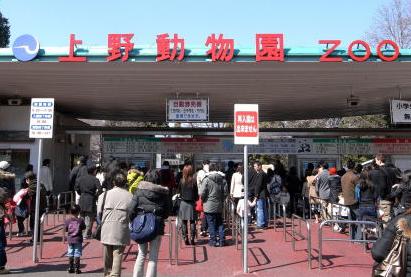
Ueno Zoo

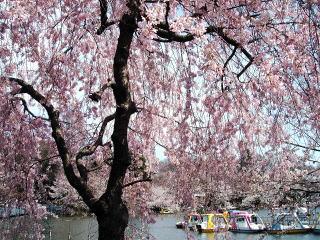
During spring is first thing that comes to people’s minds during this season is going to hanami (花見, Cherry Blossom watching), eating traditional Japanese food and enjoying some traditional music under the blooming cherry trees. In Ueno Park, however, the Hanami experience will be accompanied by classical music setting a tranquil and relaxing mood. Also called the “Tokyo Opera Forest,” Ueno Park is holds the “Spring Festival in Tokyo” each year and the event starts on March 16th and runs up until April 10th.

Hanami in Ueno

Traditional Japanese Food

This mixed spectacle is a great new way to appreciate Hanami and classical music, and is bound to delight a broad range of people. This 27-day-long celebration consists of 40 concerts in total, which includes free concerts performed in cafes, restaurants and cultural facilities such as the park’s art galleries and museums.
The festival has been running for a number of years, initially organized with the intent of attracting people to visit Ueno for Hanami, which back in the Edo period was reputed to be the best location for the tradition. The concept of playing classical music in the park promotes the idea that the cherry blossom experience needs not be strictly associated with traditional Japanese music, because cherry blossoms are a symbol of joy, no mater what culture or tradition you may come from.


Higherground Co.,Ltd.
2-8-3 Minami-Aoyama, Minato-ku, Tokyo, Japan
TEL:03-6459-2230
MAIL:info@higherground.co.jp
HP:http://www.higherground.co.jp/
TOP PAGE: http://livingtokyo.net/

RSS リーダーで購読する

Inokashira Park in Kichijoji, Tokyo

inokashira

Inokashira Koen (井の頭公園) straddles between Musashino (武蔵野) and Mitaka (三鷹) in western Tokyo.

Inokashira Pond (井の頭池) and the Kanda River (神田川) water source established during the Edo period, are the primary sources of the Kanda River. The Inokashira Lake was once the source of the Kanda district water supply, the first water supply irrigated into the Edo area.

inokashira

Drawing of Inokashira Pond by Utagawa Hiroshige, a famous painter in the Edo period).

Until the water supply reformation in 1898, the lake played an important part in providing water to the residents. The lake rumoured to have been named by the third Tokugawa Shogun, Tokugawa Ieyasu (徳川家康). And the meaning of the name theorized to either mean “the source of the water supply” or “a well that provides delicious water.”

Tokugawa Ieyasu Portrait of Tokugawa.

The land was originally given to Tokyo in 1913. Then on May 1, 1918, then opening under the name of Inokashira Onshi Kōen (井の頭恩賜公園), which can be roughly translated as, “Inokashira Imperial Gift Park”. Hence the park was considered to be a gift from the then Emperor Taishō (大正天皇) to the general public. This being the first time in Tokyo, that a park was ever founded in such a manner.

The park is divided into four areas: Inokashira Lake and its surroundings, the Gotenyama (御殿山) area which has a grove of mixed trees and cultural nature garden, the western park area with sport facilities, and the Dai-ni Park (第二公園) located in the southeast portion of the western park.

inokashira inokashira

Within The Park a small temple dedicated to Benzaiten (弁財天), a vengeful goddess of love.

inokashira

Benzaiten is said to have cast a spell on courting couples, bringing love affairs to an untimely end. This spell was rumoured to take particular effect on couples that ventured out on to the pond in a boat.
The park also has a petting zoo and a small aquarium and is a place where vendors, musicians, artists and street performers gather. On weekends and holidays the park is bustling with crowds who arrive to take in the lively environment, especially during the cherry blossom season when the entire park is overrun with visitors for hanami.

inokashira

On the southwest end of Inokashira Park is the Ghibli Museum (三鷹の森ジブリ美術館), a hugely popular destination dedicated to the animated productions from the famous Studio Ghibli.

Ghibli

Ghibli

A forest of Japanese cedar trees cultivated at the source of the river provides lush scenery in the area. Although with the passing of time the type of trees and the feeling of the forest may have changed and the area considered less suburban at present, it is still fantastic a place for relaxation and refreshment for the residents of Tokyo. Inokashira Park is a very social place, great for hanging out, drinking beers or practicing an instrument.


Higherground Co.,Ltd.
2-8-3 Minami-Aoyama, Minato-ku, Tokyo, Japan
TEL:03-6459-2230
MAIL:info@higherground.co.jp
HP:http://www.higherground.co.jp/
TOP PAGE: http://livingtokyo.net/

RSS リーダーで購読する

Roppongi Hills

Roppongi Hills

Roppongi Hills, also known as the ‘Artelligent City,’ is one of Japan’s largest integrated property developments, located in the Roppongi district of Minato, Tokyo.
Seventeen years after the design’s initial conception and construction by building tycoon Minoru Mori (森稔), the complex opened to the public on April 23, 2003.
The mega-complex incorporates apartments, a hotel, a major TV studio, a museum, cafés, movie theatres, office space, restaurants, shops, an outdoor amphitheatre and a few parks. The centrepiece of the development is the 54-story Mori Tower.
Mori’s stated vision was to build an integrated development where high-rise inner-urban communities allow people to live, work, play and shop in proximity to eliminate commuting time.

Mori Tower

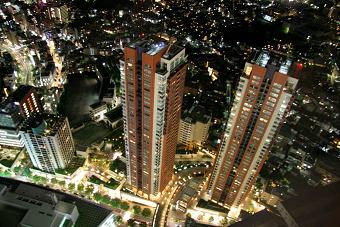
The largest building, the Mori Tower serves as a landmark in the area and presents an awe-inspiring 360˚ night view over Tokyo on the Sky Deck, an open air viewing area, which is a famed visit for lovers. Then what better way to end an evening off on the 52nd floor (same level as the Tokyo City View, as the observation deck it is called), sipping on a glass of wine, whilst watching the traffic wind their way around the foundations of the building.

Roppongi Hills

Roppongi Hills

Catering for the prospective shopper’s every delight, shopping in the Roppongi hills ranges from food halls to boutiques and entertainment. There is also a huge cinema complex showing all the latest Japanese and Western productions serving caramel popcorn which by Japan standards, is pretty rare. A Museum presenting a vast variety of fine arts exhibits, featuring Japanese and international artists. You are even spoilt for choice with three floors of malls with shops, cafes, restaurants and clubs and everything else that tickles your fancy. And there is an Academy featuring a school, library, a cultural centre and a conference centre.

Roppongi Hills

There is a multitude of by monthly events in the area partake in such as beer festivals, exhibitions, live performances and even wedding planning. Every Saturday morning you can purchase freshly picked vegetables direct from the Ibaraki prefecture at very reasonable prices. Try to be an early bird so you are not disappointed as things do sell out very quickly.

Roppongi Hills

With more than 200 shops, cafes, and restaurants and pretty much everything else you can imagine you are provided with a new and varied experience.
Facilities are all located in high quality architecture, surrounded by designer gardens and promenades creating a lively urban landscape. All the while, each building has its own unique, special character.


Higherground Co.,Ltd.
2-8-3 Minami-Aoyama, Minato-ku, Tokyo, Japan
TEL:03-6459-2230
MAIL:info@higherground.co.jp
HP:http://www.higherground.co.jp/
TOP PAGE: http://livingtokyo.net/

RSS リーダーで購読する

Shinagawa Inter City

Shinagawa Inter City

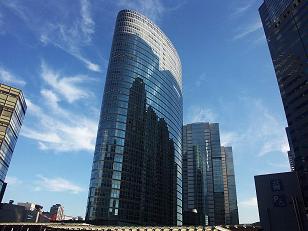
Shinagawa Inter City (品川インターシティ), which opened in December 1998 on the east side of Shinagawa Station, is Japan’s largest super high-rise complex. The complex consists of various shops, restaurants and offices, and also plays host to an events hall, a gallery, a clinic, a bank and a post office.
Shinagawa is fast becoming one of the major commercial districts in Japan. The striking Shinagawa Inter city Tower A, gives spectacular views over the city, Tokyo Bay and the Rainbow Bridge. The building has convenient undercover access to Shinagawa Station, which provides direct access to Narita and Haneda Airports. The second floors of the buildings are connected to one another by semi-roofed aerial walkways called skyways.

Shinagawa Station Shinagawa Skywalk

The buildings themselves were designed with the environment in mind, using natural ventilation and a cheap night electrical system for heating and low voltage lighting. Infra red reflecting glass was also used during the construction, providing shelter from harmful sunlight, whilst providing plenty of natural light.

Every Sunday from 11 am – 4 pm there is a flea market inside the Shinagawa Inter city building. It’s completely free to enter and there are lots of stalls. Selling lots of kids clothes, toys, women’s and men’s clothing, accessories, electronic goods and just about everything else. It’s advised that you go early as people really do get there as soon as it opens and buy out just about everything within the first few minutes, literally.

Shinagawa Inter City - Flea Market

Since this flea market is held indoors, it’s pretty easy to take kids along and there is no need to worry about the weather. There are clean bathrooms, a McDonald’s is nearby and a big outdoor courtyard-like space for the kids to run around and play. Even if you just leave with one thing, it’s always fun to browse around the flea markets. To get to the Shinagawa Inter city Flea Market by train, take JR or Keikyu lines to Shinagawa station and take the Konan Exit (港南口).

A delightful selection cafes and restaurants can be found dotted all around the complex as well as a few watering holes. With space being such a commodity in Tokyo, the mixed usage of space seen within the complex is one to be admired. It manages to cater for every whim and it’s all provided in an eco friendly environment.


Higherground Co.,Ltd.
2-8-3 Minami-Aoyama, Minato-ku, Tokyo, Japan
TEL:03-6459-2230
MAIL:info@higherground.co.jp
HP:http://www.higherground.co.jp/
TOP PAGE: http://livingtokyo.net/

RSS リーダーで購読する

Gal Fashion at Shibuya109

109

“Where are you?”
“Ok, ok. See you soon then, in front of Marukyu (09)!”

While I was stuck in a hectic crowd in Shibuya, always listening to the conversations between the trendy girls around me.
“Marukyu?” What does it mean?
I used to wonder what Marukyu was, now that I do; it’s quite embarrassing that I once didn’t…

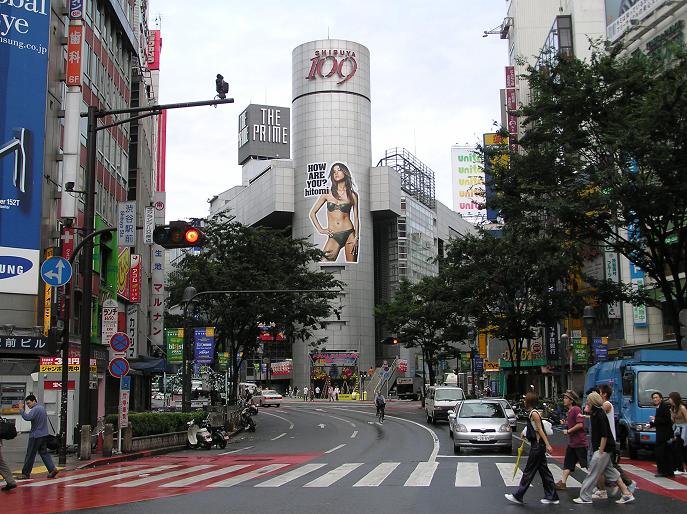
The Shibuya 109 (ichimarukyū) building is a famous fashion shopping centre targeted at young women from teens to twenties, located just across the street from Shibuya Station, first opened in April 1979.
As the building stands proud, 109 is also famous meeting point in Shibuya.

The building is owned by Tokyu and as such is where the building derives its name from as 109 in Japanese is pronounced “to, kyu” (10, 9), thus “Shibuya to kyu”. The interior of the building is designed to move shoppers in a loop on each floor from the elevators past the various shops. Although originally targeted at women in their 30s, the building then later became more known as a mecca for young women from the Gal (ギャル, girl) subculture.

Gal Fashion

Shibuya 109 Building shopping centre filled with many very trendy clothing boutiques. It is very popular among young people, especially teens, and it is famous as the origin of the kogal (コギャル) subculture. Kogals are known for wearing platform boots, a miniskirt, copious amounts of makeup, hair colouring (usually blond), artificial suntans, and lots of designer accessories.
For more information regarding the Gal, please refer to the site below for more details.
http://www.japaneselifestyle.com.au/fashion/kogal.html

109

On the Shibuya 109 Building site (Japanese language, but with enough English to navigate) you can see pictures of all the stores in the shopping complex.

http://www.shibuya109.jp/

So, is 109 only for girls in a particular fashion scene like Gal/Kogal?
Is 109 only for the younger generation?

No not at all. Once upon a time it used to be, but nowadays, that’s not the case.

109 has changed and developed vastly and now a fashion complex loved by all women who love to wear cute fashion at reasonable prices.
Nowadays, as various types of fashion magazines display and write articles about the clothing found 109. There are a generous variety of the shops stocking items for the “Girly” to the “Stylish”. After that it succeeded to hold more customers, and the stereo type thinking 109 as for only Gals seems collapsed totally now.

109

One of the main attractions of the shops in 109 is their cheap price.
You can grab a trendy shirt anywhere between 3,000yen-5,000yen.
During sale season (Mainly in July and December), you can find the clothing at incredibly reduced prices.

They are doing net shopping.
Check out the latest and hottest items in Japanese fashion!
http://e-shop.shibuya109.jp/webshop70/main


Higherground Co.,Ltd.
2-8-3 Minami-Aoyama, Minato-ku, Tokyo, Japan
TEL:03-6459-2230
MAIL:info@higherground.co.jp
HP:http://www.higherground.co.jp/
TOP PAGE: http://livingtokyo.net/

RSS リーダーで購読する

ホーム > アーカイブ > 2010-03

profile

inquiries in English are welcome.
Higherground, an estate agent in Tokyo, has hundreds of properties especially apartments for rent in Tokyo. We offer you low cost agent commissions.

If you find anything suitable for you in other web sites, please feel free to call us for our agent commisions.
As your agent, we negotiate rent prices too!

Higherground Co.,Ltd.
third floor, 2-8-3 Minami-Aoyama Minato-ku Tokyo
TEL 03-6459-2230 FAX 03-6459-2231
info@higherground.co.jp
http://www.higherground.co.jp

RSS リーダーで購読する

entry
calendar
« 3 月 2010 »
M T W T F S S
1 2 3 4 5 6 7
8 9 10 11 12 13 14
15 16 17 18 19 20 21
22 23 24 25 26 27 28
29 30 31        
archives
外部PR

ページのトップに戻る